
Why Your Online Reputation Is One of Your Most Valuable Business Assets
- Reading Time : 10 min
- Category : Reputation
- Updated Date : 24-08-2026
Table Of Content
- Your Reputation Speaks Before You Do
- Trust Is the Missing Layer in Many Marketing Strategies
- Reviews Are More Than Stars Conversions
- Reputation Management at a Glance
- Reputation Can Strengthen Every Marketing Channel
- The Goal Isn’t to Have Perfect Reviews
- Build Reputation Before You Need It
- Final Thoughts
Introduction
People rarely make purchasing decisions based only on what a business says about itself. They look for evidence. They search your business online. They read reviews. They look at your website. They check your social media presence. They compare you with competitors. They look for signs that other people have trusted you before making the same decision.
This is why your online reputation has become one of the most valuable assets your business can build. A strong reputation can reduce hesitation, increase enquiries and make your marketing more effective. A weak or neglected reputation can create doubt before a potential customer ever speaks to your team.
The important thing is that reputation isn’t created by one review, one campaign or one social media post. It is created through the accumulation of customer experiences and the evidence those experiences leave behind.
Your Reputation Speaks Before You Do
Imagine someone discovers your business for the first time. They may have found you through Google, an advertisement, social media, a referral or a search for a particular service. At this point, they know very little about you. Before contacting you, they may search your company name. What happens next matters.
If they find a professional website, consistent branding, recent positive reviews and evidence of satisfied customers, uncertainty begins to decrease. If they find an outdated website, very few reviews, unanswered negative feedback or an inactive online presence, uncertainty can increase. The customer hasn’t spoken to your team yet. But your reputation has already started the conversation. This is why reputation should not be treated as something that sits separately from marketing. It is part of the customer journey.
Trust Is the Missing Layer in Many Marketing Strategies
Businesses spend enormous amounts of time trying to attract attention. They invest in advertising, SEO, social media, content and outbound campaigns. But attention alone doesn’t create customers. People need a reason to believe that choosing your business is a safe and worthwhile decision. That reason is often trust.
A potential customer might understand what you offer within seconds, but still hesitate to contact you because they don’t know whether your business will deliver what it promises. Reviews, testimonials, case studies, recommendations and visible customer experiences help reduce that uncertainty. They provide something your own marketing cannot provide on its own: evidence from other people.
Your business can say that it provides excellent service. A customer review demonstrates that someone experienced it. That distinction is powerful.

Reviews Are More Than Stars
It’s easy to think of reviews as a simple rating system.
Four stars.
Five stars.
Three stars.
But the real value of a review goes beyond the number. Customers often look at what previous customers actually experienced. They want to understand the quality of communication, professionalism, responsiveness, service delivery and overall experience. A detailed positive review can answer questions that your website may never anticipate.
It can also help potential customers imagine what their own experience could look like. This makes reviews a form of customer-generated marketing. Instead of your business explaining why customers should choose you, your existing customers help communicate that message for you.
Reputation Management at a Glance
| Reputation Element | What It Builds | Business Impact |
|---|---|---|
| Customer Reviews | Social proof | Reduces purchase hesitation |
| Testimonials | Credibility | Strengthens conversion decisions |
| Review Responses | Professionalism | Shows customers the business is responsive |
| Case Studies | Evidence of results | Helps prospects evaluate expertise |
| Consistent Online Presence | Brand confidence | Creates a more professional first impression |
| Automated Feedback Requests | Review consistency | Creates a repeatable reputation-building process |
Reputation Can Strengthen Every Marketing Channel
A strong reputation doesn’t only help when someone searches your company name. It can strengthen other marketing activities as well. Imagine someone sees your advertisement for the first time. They may become interested but still hesitate. They search your company. Now they see dozens of recent customer reviews and strong testimonials. The advertisement created awareness. Your reputation creates confidence.
The same principle applies to SEO, social media, email marketing, outbound campaigns and referrals. Marketing gets people interested. Reputation can help convince them that the interest is worth acting on. That is why reputation should be viewed as an asset supporting the entire marketing ecosystem rather than as an isolated review-generation task.
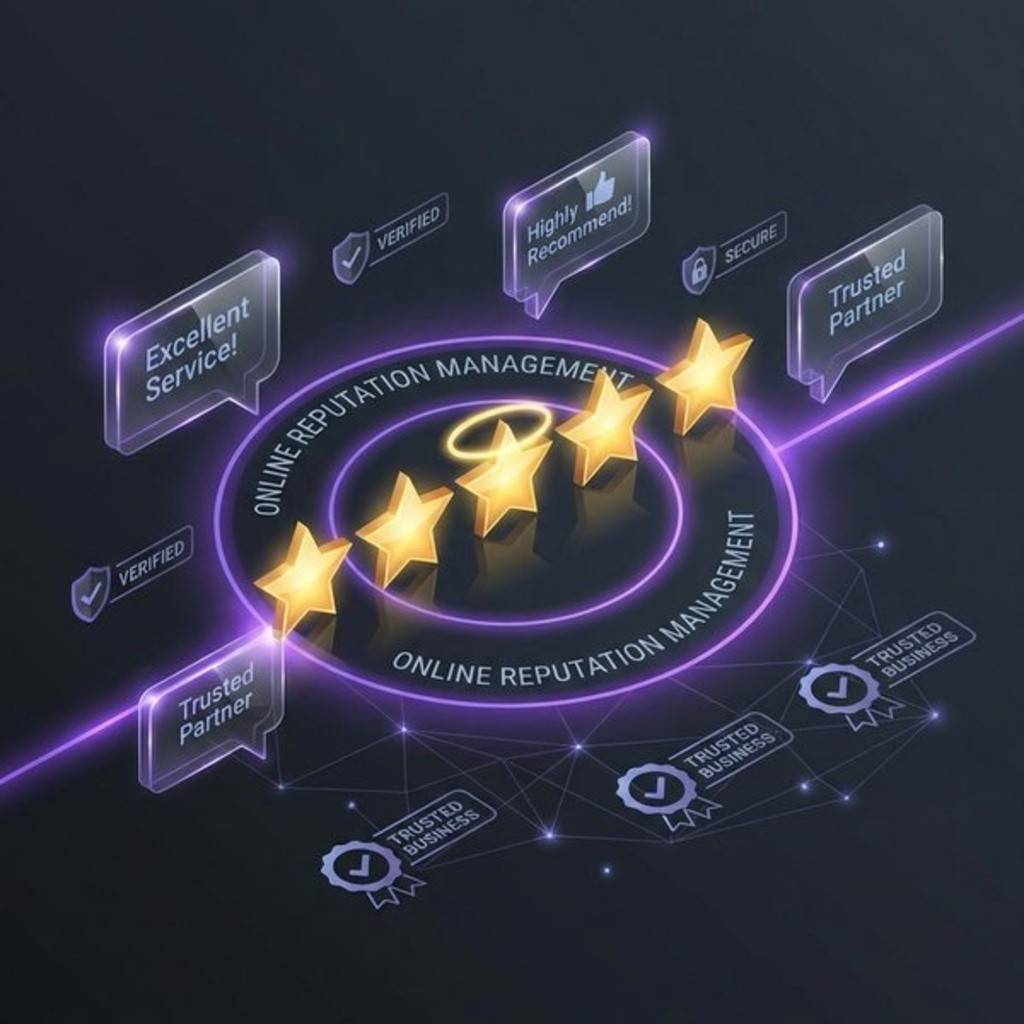
The Goal Isn't to Have Perfect Reviews
A business with nothing but perfect five-star reviews may not necessarily appear more trustworthy. Customers understand that businesses aren’t perfect. What matters is the overall pattern.
Are customers consistently satisfied?
Does the business respond professionally?
Are recent reviews being generated?
Do customers describe specific positive experiences?
Does the company take responsibility when something goes wrong?
These signals can create a much stronger impression than simply trying to collect as many five-star ratings as possible. Authenticity matters. The objective should be to create excellent customer experiences and make it easy for genuinely satisfied customers to share them.
Build Reputation Before You Need It
One of the worst times to start thinking seriously about reputation is when you already have a reputation problem. Building trust takes time. Businesses should develop a consistent process for collecting legitimate customer feedback while experiences are fresh and customers are engaged. This doesn’t mean constantly asking customers for reviews.
It means identifying appropriate moments in the customer journey and making the process simple. Over time, those small actions create a stronger body of evidence around your brand. Then, when a new customer discovers your business, they don’t have to rely entirely on what you say.
They can see what other people have experienced.
Final Thoughts
Your reputation is no longer something that exists only through word of mouth. It exists online, across search results, review platforms, social media, websites, testimonials and customer conversations.
Every interaction contributes to it.
Every review adds to it.
Every response communicates something about your business.
And every customer experience can either strengthen or weaken it.
The businesses that understand this don’t simply chase more reviews. They build systems that consistently create better customer experiences, collect genuine feedback and turn positive experiences into visible trust. Because when customers are deciding who to trust, your reputation may speak before your sales team ever gets the opportunity.
Frequently Asked Questions
What is online reputation management?
Online reputation management is the process of monitoring, improving and maintaining how a business is perceived across online channels such as search results, review platforms, social media and websites.
Why is online reputation important for businesses?
Online reputation can influence how much confidence potential customers have in a business before making contact. Positive reviews, testimonials and professional responses can help reduce uncertainty and strengthen trust.
How do customer reviews affect business reputation?
Customer reviews provide social proof by showing potential customers what previous customers experienced. Recent, genuine and detailed reviews can help communicate credibility and improve confidence in a business.
Should businesses respond to negative reviews?
Businesses should generally respond professionally to legitimate negative feedback. A thoughtful response can demonstrate that the business listens to customers and takes concerns seriously.
How can businesses get more customer reviews?
Businesses can create a consistent process for requesting genuine feedback after appropriate customer interactions or completed services. Automation can help make these requests more consistent without relying entirely on manual follow-up.
Turn Customer Experiences Into Business Growth
Your customers are already forming opinions about your business. The question is whether you’re actively building the reputation those customers see. Auxth helps businesses create connected digital growth systems that bring together customer experience, reputation management, marketing, CRM and automation.
Ready to build a stronger reputation and turn trust into more opportunities?
Related Articles
What Is GoHighLevel? The Complete Business Guide (2026)
Learn what GoHighLevel is, how it works, its key features, benefits, pricing, and why businesses use it to automate marketing, sales, and customer management.
10 GoHighLevel Features Every Growing Business Should Use in 2026
Discover the 10 most powerful GoHighLevel features that help businesses automate marketing, manage leads, build sales funnels, streamline customer communication, and improve efficiency, all from one all-in-one business platform.

What Is Business Automation? A Complete Beginner's Guide
Discover how business automation helps companies streamline repetitive tasks, improve productivity, reduce errors, and create more efficient workflows.