
Why Most Digital Transformation Projects Fail (And How to Avoid It)
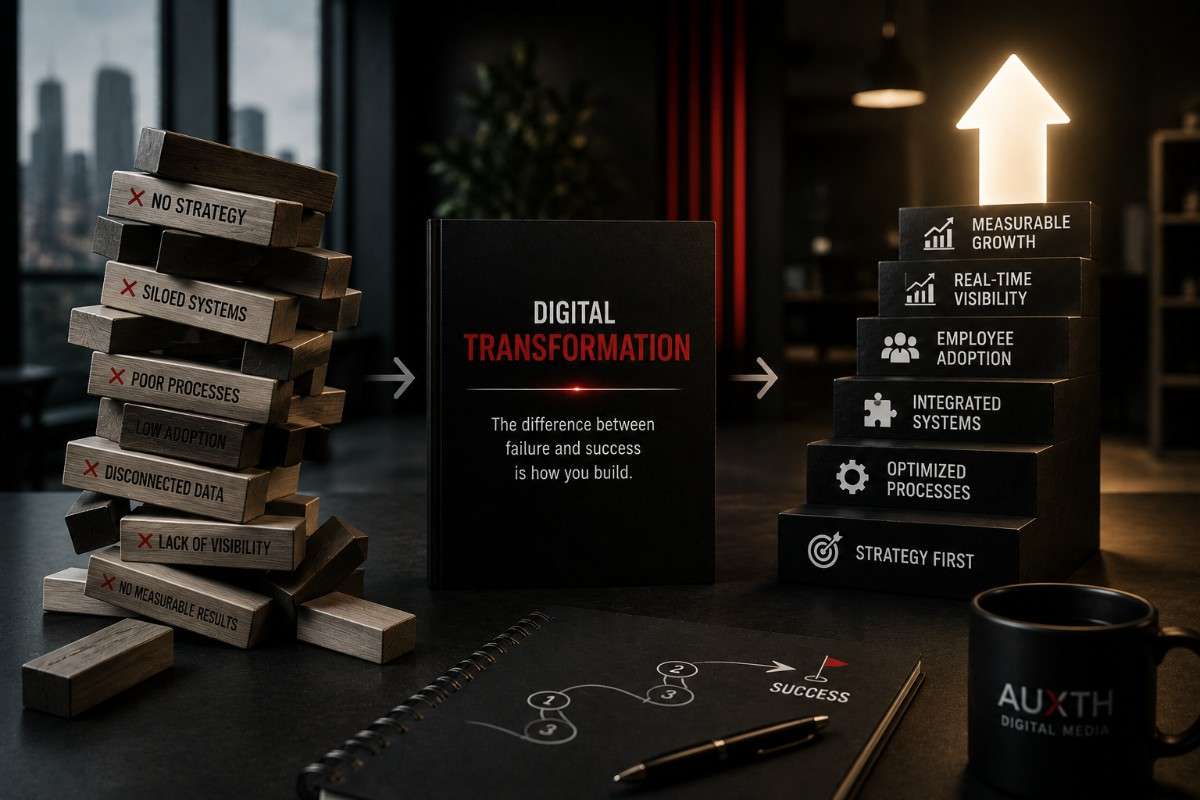
Why Digital Transformation Has Such a High Failure Rate
Over the last decade, digital transformation has become one of the most discussed business initiatives across every industry. Organisations invest millions of dollars into cloud software, artificial intelligence, automation platforms, customer relationship management systems, and data analytics with the expectation that technology will increase productivity, improve customer experiences, and accelerate growth.
Yet despite these investments, many transformation initiatives fail to achieve their intended outcomes.
Businesses often find themselves using expensive software that employees rarely adopt, automations that create new operational problems, and disconnected systems that make everyday work even more complicated than before. Instead of becoming more efficient, organisations become overwhelmed by technology that fails to solve their underlying business challenges.
Research consistently shows that a significant percentage of digital transformation projects either fail completely or deliver far less value than expected. The reason is rarely the technology itself. Modern software platforms are more capable than ever.
The real challenge lies in how businesses approach transformation.
Many organisations treat digital transformation as a technology project when it is actually a business transformation initiative. Technology is only one component of the equation. Without clear processes, leadership alignment, employee adoption, and measurable objectives, even the most advanced software cannot create sustainable results.
Successful digital transformation begins long before the first piece of technology is implemented.

What Digital Transformation Really Means
One of the biggest misconceptions surrounding digital transformation is that it simply involves purchasing new technology.
In reality, digital transformation is the process of redesigning how a business operates by integrating technology into its people, processes, and customer experiences. It is about improving the way work is performed rather than simply digitising existing workflows.
For example, replacing paper forms with online forms is digitisation.
Creating an automated customer onboarding system that reduces processing time by 70 percent while improving customer satisfaction is digital transformation.
The difference is significant.
Digitisation changes the format of work.
Digital transformation changes the way work happens.
Successful organisations use technology to eliminate unnecessary tasks, simplify communication, improve visibility across departments, and create better experiences for customers and employees alike.
When businesses understand this distinction, they stop asking, "Which software should we buy?" and begin asking, "How can technology improve the way we operate?"
That shift in thinking often determines whether transformation succeeds or fails.
Seven Reasons Digital Transformation Projects Fail
1. Technology Comes Before Strategy
Many organisations purchase software because competitors are using it or because it promises impressive features. However, without a clear business strategy, technology becomes an expensive tool searching for a problem to solve.
Every technology decision should support measurable business objectives such as reducing response times, increasing customer retention, or improving operational efficiency.
2. Poorly Defined Business Processes
Technology cannot fix broken processes.
If customer onboarding is inconsistent before automation, automating that workflow simply makes inconsistency happen faster.
Businesses should document, optimise, and standardise their processes before introducing automation or AI.
3. Lack of Leadership Commitment
Digital transformation requires strong leadership support.
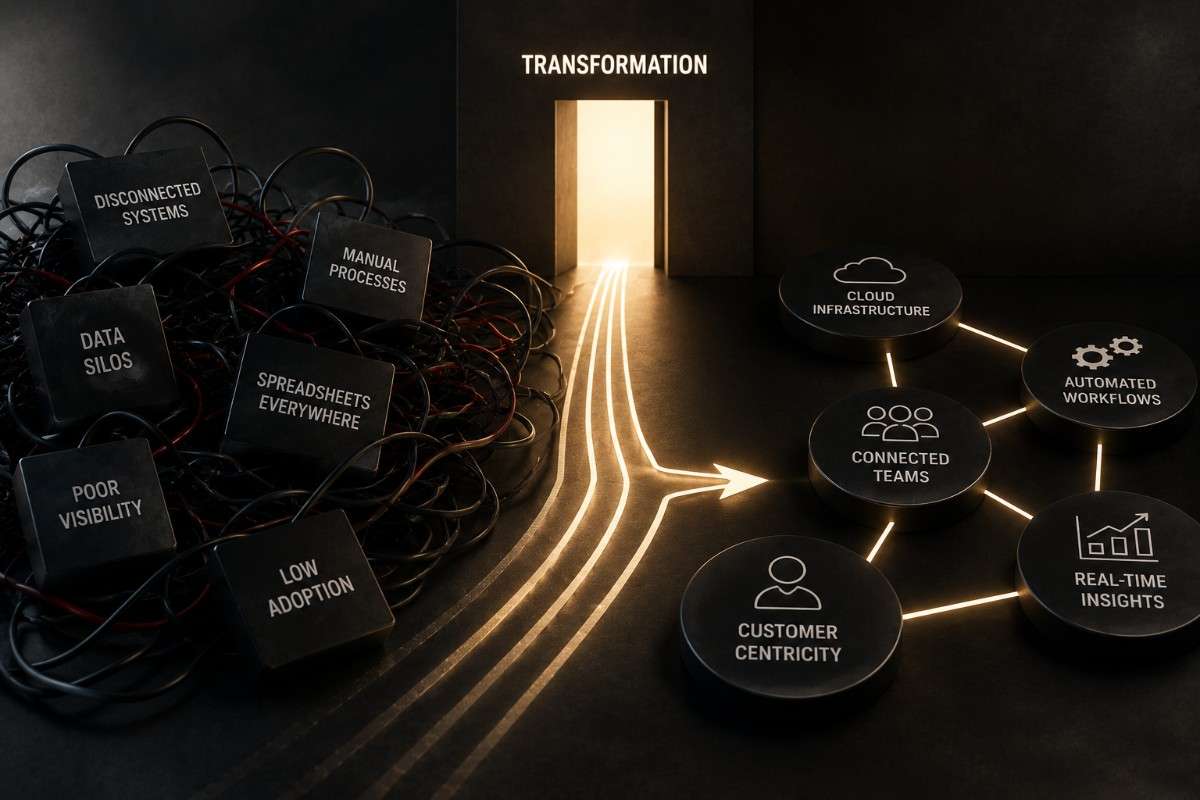
When executives view transformation as an IT responsibility instead of an organisational priority, departments often pursue conflicting objectives, creating disconnected systems and fragmented customer experiences.
Successful transformation starts from the top.
4. Employee Resistance to Change
People naturally resist change when they don't understand its purpose.
Employees who receive little training or communication often continue using familiar manual methods even after new technology has been introduced.
Successful businesses involve employees throughout the transformation journey, explain why changes are necessary, and provide ongoing support.
5. Unrealistic Expectations
Many organisations expect immediate returns after implementing new software.
Digital transformation is not a one-time project.
It is a continuous process of optimisation, measurement, and improvement.
Businesses that expect overnight success often abandon initiatives before meaningful results appear.
6. Measuring the Wrong Metrics
Some companies evaluate transformation based on how many systems were implemented rather than the business outcomes achieved.
Installing new software does not automatically create value.
Success should be measured through operational improvements such as reduced manual work, faster response times, improved customer satisfaction, increased revenue, and better employee productivity.
7. Ignoring Customer Experience
Many digital transformation initiatives focus entirely on internal operations while overlooking the customer journey.
Technology should simplify customer interactions rather than complicate them.
The most successful organisations design systems around customer needs first and internal efficiency second.
Why Some Businesses Succeed While Others Struggle
| Failed Transformation | Successful Transformation |
|---|---|
| Technology first. | Business strategy first. |
| Undocumented workflows. | Standardised business processes. |
| Poor employee adoption. | Comprehensive training and change management. |
| Disconnected software. | Integrated business ecosystem. |
| Software becomes another expense. | Technology delivers measurable business outcomes. |
A Practical Digital Transformation Framework
Businesses that consistently succeed with digital transformation generally follow a structured approach rather than implementing technology randomly.
Step 1: Understand Current Operations
Map existing workflows, identify bottlenecks, and document every critical business process.
Without understanding today's operations, improving tomorrow's operations becomes impossible.
Step 2: Define Clear Business Goals
Transformation should always support measurable objectives.
Examples include:
- Reduce customer response time by 50%
- Eliminate manual data entry
- Increase lead conversion rates
- Improve project delivery speed
- Enhance customer satisfaction
Technology should always serve business goals—not replace them.
Step 3: Standardise Processes
Before automation, businesses should eliminate unnecessary approvals, duplicate work, and inconsistent procedures.
This creates a reliable operational foundation.
Step 4: Select Technology That Fits Your Strategy
Choose platforms based on business requirements rather than marketing promises.
The best software is not necessarily the platform with the most features—it is the one that aligns most closely with your operational goals.
Step 5: Prepare Employees
Provide training, encourage collaboration, and explain how new systems will improve daily work.
People remain the most important component of every transformation initiative.
Step 6: Measure and Improve Continuously
Digital transformation is never finished.
Successful organisations continuously review performance, collect feedback, refine workflows, and optimise systems as the business evolves.
Measuring Success Beyond Technology
Many organisations celebrate completing software implementation.
Successful businesses celebrate measurable business improvements.
Instead of asking whether the software has been installed, leaders should ask questions such as:
- Are employees completing tasks faster?
- Has customer satisfaction improved?
- Have operational costs decreased?
- Are managers spending less time solving repetitive issues?
- Are customers receiving more consistent service?
- Is the organisation making better decisions using accurate data?
Technology becomes valuable only when it improves measurable business outcomes.
The companies that achieve long-term success understand that digital transformation is not an IT project. It is an ongoing commitment to building smarter systems, empowering employees, and continuously improving the customer experience.

- Digital transformation fails when businesses focus on technology instead of strategy.
- Documented and standardised processes are essential before implementing automation.
- Leadership commitment and employee adoption are equally important as software selection.
- Transformation should improve measurable business outcomes rather than simply introducing new tools.
- Customer experience should remain at the centre of every transformation initiative.
- Digital transformation is a continuous journey of optimisation, not a one-time technology project.
Frequently Asked Questions
Digital transformation is the process of integrating technology into business operations to improve workflows, customer experiences, decision-making, and overall organisational performance. It involves changing how businesses operate rather than simply adopting new software.
Most projects fail because businesses prioritise technology before defining strategy, documenting processes, training employees, or establishing measurable business objectives. Successful transformation requires organisational change, not just software implementation.
No. Documenting and standardising business processes should always come first. Automation works best when it supports efficient, consistent workflows rather than amplifying existing inefficiencies.
Digital transformation is an ongoing process rather than a fixed project. While individual implementations may take weeks or months, continuous optimisation and improvement are essential for long-term success.
Conclusion
Digital transformation has the potential to revolutionise how organisations operate, serve customers, and compete in increasingly digital markets. However, technology alone cannot solve operational challenges rooted in inconsistent processes, unclear objectives, or poor organisational alignment.
Businesses that achieve meaningful transformation understand that success begins with strategy, not software. They document workflows, simplify operations, engage employees, define measurable goals, and then introduce technology that supports those objectives. As systems mature, they continue refining processes, measuring outcomes, and adapting to changing business needs.
The organisations that thrive over the next decade will not necessarily be those investing in the most technology—they will be the ones using technology most effectively to create smarter operations, stronger customer relationships, and sustainable competitive advantages.
Ready to build a transformation strategy that actually works?
If your organisation is planning a digital transformation initiative, start by understanding your processes before investing in technology. At Auxth, we help businesses document workflows, optimise operations, implement automation, and build integrated digital systems that support long-term growth.
Book a Strategy Call