
Website vs. Sales Funnel: What Does Your Business Actually Need?
- Reading Time : 10 min
- Category : Outbound System
- Updated Date : 17-08-2026
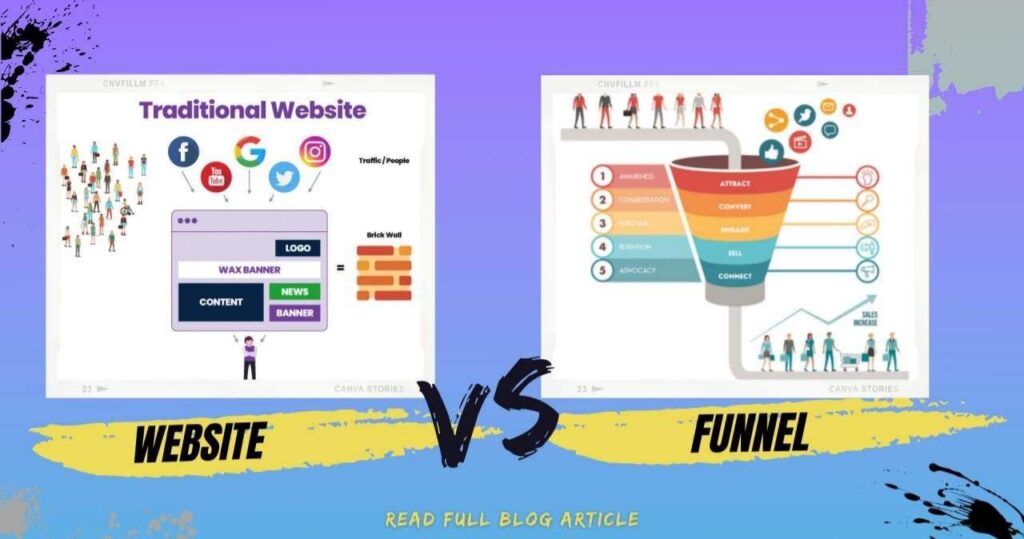
Table Of Content
- What Is a Business Website?
- What Is a Sales Funnel? Than Your Design
- Website vs Sales Funnel: The Key Difference
- When Your Business Needs a Website
- When Your Business Needs a Sales Funnel
- The Strongest Approach Is Often Both
- The Real Problem Isn’t Choosing Between Them
- Build Around the Customer Journey
- Final Thoughts
Introduction
When businesses decide to improve their online presence, one question often appears sooner or later: should we build a website or a sales funnel? The answer isn’t always one or the other.
A website and a sales funnel serve different purposes. A website is usually designed to establish a company’s presence, explain its services, build credibility, and give visitors multiple ways to explore the business. A sales funnel is designed around a specific customer journey, usually with one primary objective such as generating a lead, booking a consultation, requesting a quote, or completing a purchase.
Understanding that difference matters because investing in the wrong structure can create unnecessary complexity or leave valuable opportunities on the table. The right choice depends on what your business is trying to achieve.
What Is a Business Website?
A business website acts as the central digital home of a company. It can contain a homepage, service pages, about information, case studies, testimonials, resources, contact information, FAQs, and other content that helps potential customers understand the business. The strength of a website is its breadth. Different visitors can enter through different pages and follow different journeys depending on what they want to learn.
Someone researching your company may read your About page. Another visitor may arrive through Google on a specific service page. A potential customer may review your case studies before contacting you. A website therefore works particularly well when your business needs to build authority, provide information, support SEO, and give customers multiple ways to interact with your brand.
What Is a Sales Funnel?
A sales funnel is more focused. Instead of encouraging visitors to explore an entire website, a funnel usually guides them through a defined sequence toward a specific action. For example, an advertising campaign might send potential customers to a landing page offering a consultation. The page explains the problem, presents the solution, establishes trust, answers key objections, and directs the visitor toward booking.
The funnel removes many of the distractions that exist on a traditional website. Its purpose isn’t necessarily to explain everything about the company. Its purpose is to move a particular audience toward a particular outcome. That makes funnels especially useful for campaigns, lead generation, promotions, consultations, webinars, product launches, and other focused marketing activities.
Website vs Sales Funnel: The Key Difference
The simplest way to think about the difference is this:
A website helps people understand your business. A funnel helps people take a specific action.
That doesn’t mean websites cannot generate leads or funnels cannot build trust. Both can do both. The difference is primarily in structure and intent. A website gives visitors more freedom to explore. A funnel deliberately limits the journey so that the visitor is encouraged toward a defined conversion point. This distinction becomes important when deciding how your marketing campaigns should work.
When Your Business Needs a Website
A website is usually the stronger foundation when your business needs a long-term digital presence. If customers regularly search for your brand, services, expertise, or location, having a structured website gives them somewhere to find reliable information. Websites are also valuable for businesses investing in SEO because individual pages can target different search topics, services, questions, and customer needs.
A website can continue building authority over time rather than being tied to one campaign or offer. For established businesses, professional services, agencies, consultants, local companies, and organisations with multiple services, a website is often an essential foundation.
When Your Business Needs a Sales Funnel
A funnel becomes particularly useful when you have a specific campaign or conversion objective. Imagine you are running Google Ads for a consultation service. Sending every visitor to your homepage may force them to navigate through several pages before they understand the offer.
A dedicated landing page can focus entirely on that service.
The visitor sees the problem, the solution, evidence of credibility, the benefits, answers to common objections, and one clear action. That focused experience can make it easier to measure the campaign and understand where prospects are dropping out. Funnels are therefore especially useful when your marketing has a clear audience, offer, and conversion goal.
What a Conversion-Focused Website Should Do
| Area | Business Website | Sales Funnel |
|---|---|---|
| Primary Purpose | Build presence, authority and trust | Drive a specific conversion |
| Structure | Multiple pages and navigation paths | Focused, sequential journey |
| Best For | Long-term business presence | Campaigns and lead generation |
| SEO | Strong foundation for organic search | Usually focused on specific campaigns |
| Visitor Freedom | High | Limited and intentional |
| Primary CTA | Can vary by page and visitor intent | Usually one main action |
| Best Traffic Sources | SEO, referrals, branded searches, social | Paid ads, email, outbound and campaigns |
| Measurement | Broader website and engagement metrics | Highly focused conversion metrics |
The Strongest Approach Is Often Both
For many businesses, the real answer isn’t website or funnel. It is website and funnel. Your website can serve as the long-term foundation of your digital presence while funnels support specific campaigns and conversion objectives.
For example, someone may discover your business through Google and explore your website before becoming interested in a particular service. Later, they might see an advertisement for that service and enter a dedicated funnel designed to turn their interest into a consultation. Both assets play different roles in the same customer journey. The website establishes the broader relationship. The funnel focuses the next action.
The Real Problem Isn't Choosing Between Them
The bigger issue is building either one without considering what happens afterward. A beautiful website can still fail if enquiries disappear into an inbox with no consistent follow-up. A well-designed funnel can also underperform if the leads entering it are not captured, qualified, nurtured, and moved through a clear sales process.
This is why websites and funnels should be connected to the wider marketing system. Traffic needs somewhere relevant to go. Visitors need a reason to act. Enquiries need to be captured. Opportunities need to be tracked. Follow-up needs to happen consistently. The asset itself is only one part of the system.
Build Around the Customer Journey
Instead of asking whether a website or funnel is better, start with a more useful question:
What journey should this customer take?
If someone is discovering your company for the first time, they may need information, credibility, and multiple opportunities to explore. If someone has already shown strong interest in a specific service, they may need a focused page that removes distractions and makes the next step easy.
Different stages of the customer journey can therefore require different digital experiences. The strongest businesses design those experiences intentionally instead of sending every visitor to the same place.
Final Thoughts
A website and a sales funnel are not competing technologies. They are different tools designed for different stages of the customer journey. Your website can establish your digital presence, build authority, support SEO, and help prospects understand your business. Your funnels can turn focused campaigns and high-intent traffic into specific actions.
When both are connected with your marketing, CRM, automation, and sales processes, they become part of one larger growth system. The goal isn’t to build more pages or more funnels simply because you can. The goal is to build the right digital experience for the right customer at the right stage. That is what turns digital infrastructure into measurable business growth.
Frequently Asked Questions
Is a website better than a sales funnel?
Neither is universally better. A website is designed to provide a broader digital presence and support multiple customer journeys, while a sales funnel is designed to guide a specific audience toward a defined action.
Can a website also be used as a sales funnel?
Yes. A website can be structured to generate leads and conversions. However, a dedicated funnel can provide a more focused experience for specific campaigns, offers, and audiences.
Do I need a website if I already have sales funnels?
In many cases, yes. Funnels can support specific campaigns, while a website provides the broader foundation for your brand, services, credibility, content, and organic search presence.
When should I use a sales funnel?
Sales funnels are particularly useful for focused offers, paid advertising campaigns, consultations, lead generation campaigns, webinars, product launches, and other situations where you want visitors to take one primary action.
Can a website and sales funnel work together?
Yes. They can form different parts of the same customer journey. A website can establish awareness and trust while funnels handle specific conversion opportunities.
Ready To Turn Your Website Into A Growth Engine?
Not sure whether your business needs a stronger website, a focused sales funnel, or both?
Auxth helps businesses design connected digital growth systems where websites, campaigns, lead capture, CRM, automation, and customer journeys work together.
Related Articles
What Is GoHighLevel? The Complete Business Guide (2026)
Learn what GoHighLevel is, how it works, its key features, benefits, pricing, and why businesses use it to automate marketing, sales, and customer management.
10 GoHighLevel Features Every Growing Business Should Use in 2026
Discover the 10 most powerful GoHighLevel features that help businesses automate marketing, manage leads, build sales funnels, streamline customer communication, and improve efficiency, all from one all-in-one business platform.
What Is Business Automation? A Complete Beginner's Guide
Discover how business automation helps companies streamline repetitive tasks, improve productivity, reduce errors, and create more efficient workflows.