
Your Website Is Not the Customer Journey
- Reading Time : 10 min
- Category : Business Growth & Automation
- Updated Date : 28-09-2026

Table Of Content
Your Website Is Only One Touchpoint
What Happens Before the Website Visit?
What Happens on the Website?
What Happens After the Enquiry?
The Gaps Between Systems
Think Beyond the Website
Final Thoughts
FAQs
Your Website Is Only One Touchpoint
Many businesses think about their website as the centre of the customer journey. It is important, but it is not the entire journey. A prospect may discover your business through LinkedIn, Google, an advertisement, social media, a referral, or a direct recommendation. They might then visit your website.
But what happens next?
Do they find the information they need?
Can they easily take the next step?
Does their enquiry reach the right person?
How quickly does someone respond?
What happens if they do not book immediately?
These interactions are all part of the customer journey. Your website is simply one piece of it.
What Happens Before the Website Visit?
The customer journey often begins before someone ever reaches your website. Your prospect may already have formed an opinion about your business based on your:
Social media presence
Search visibility
Reviews
Advertisements
LinkedIn profile
Content
Brand positioning
Recommendations
This means your website cannot completely fix a weak first impression. If your external presence creates confusion or distrust, fewer prospects will move forward even if your website looks professional. The customer experience starts before the click.
What Happens on the Website?
Once someone arrives, the website has a different job. It needs to answer important questions quickly:
What does this business do?
Is this solution relevant to me?
Can I trust this company?
What should I do next?
A website that looks good but does not answer these questions can still create friction. The goal should not simply be to make visitors stay longer. The goal is to help the right visitors understand the value and take the appropriate next step.
What Happens After the Enquiry?
This is one of the most overlooked parts of the customer journey. Imagine a prospect fills out a form. The website has done its job. But then the enquiry sits in an inbox for several hours. Or someone forgets to follow up. Or the prospect receives no confirmation. Or the sales team does not know where the lead came from.
The website generated the opportunity, but the process failed afterwards. A strong customer journey connects the website to the systems and people responsible for what happens next.
| Growth Stage | What to Track | Why It Matters |
|---|---|---|
| Lead Generation | Lead volume and source | Shows where opportunities come from |
| Qualification | Qualified lead rate | Shows lead quality |
| Sales | Appointments and conversions | Shows sales effectiveness |
| Revenue | Closed deals and customer value | Shows commercial performance |
| Retention | Repeat business and renewals | Shows customer value over time |
These metrics help leaders identify where the system is performing well and where improvements are needed.
Think Beyond the Website
A better approach is to look at the complete journey. Consider every major interaction:
Discovery → Website → Enquiry → Follow Up → Sales → Purchase → Onboarding → Retention
Then ask what happens at each stage.
Where does information move?
Where does the customer have to wait?
Where does someone have to perform a repetitive manual task?
Where could a prospect become confused?
Where could automation improve consistency?
This perspective reveals opportunities that a website redesign alone cannot solve.

The Website Should Connect to the Business
A high performing website should not operate in isolation. It should work with the systems behind it. For example, a website enquiry can trigger:
Lead creation
Internal notification
Lead assignment
Confirmation message
Follow up sequence
Appointment scheduling
Sales pipeline updates
This creates continuity between the customer’s online experience and the business’s internal process. That is where technology becomes useful. Not because automation is impressive, but because it removes unnecessary gaps.
Final Thoughts
Your website matters. But your website is not the customer journey. The real experience exists across every interaction a prospect has with your business, before the website visit, during the decision process, after the enquiry, and long after the purchase. Businesses that focus only on their website can miss the bigger opportunity. The goal should be to build a connected experience where marketing, website, sales, communication, automation, and customer service work together.
A better website can improve a customer journey. A connected system can transform it.
Frequently Asked Questions
What is a repeatable growth system?
A repeatable growth system is a connected set of processes that consistently moves prospects from lead generation through sales, customer delivery, retention, and improvement.
How does a CRM support business growth?
A CRM centralizes customer information, sales opportunities, communication, follow ups, and pipeline activity, helping businesses manage their growth process more effectively.
Can automation improve revenue growth?
Automation can improve the consistency and efficiency of processes such as lead capture, follow up, scheduling, pipeline management, and customer communication.
Why is customer retention part of a growth system?
Revenue growth is not only about acquiring new customers. Retention, repeat purchases, renewals, and referrals can also contribute significantly to long term business growth.
How can businesses make their growth system better?
Measure each stage of the customer journey, identify bottlenecks, improve the weakest areas, and continuously repeat the process of testing and optimization.
Build a Repeatable Growth System With Auxth
Auxth helps businesses connect CRM, lead management, sales automation, follow ups, customer communication, marketing, scheduling, and other business workflows into practical systems. By connecting these processes, businesses can reduce manual gaps, improve visibility, and create a more organized path from lead generation to revenue.
Ready to build a repeatable growth system for your business? Get in touch with Auxth and explore how connected automation can support sustainable growth.
Related Articles
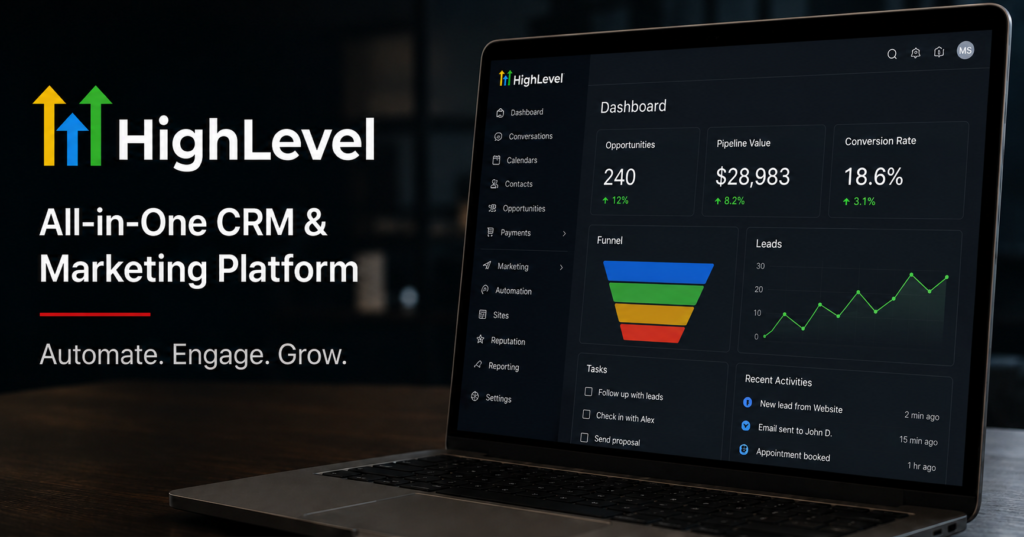
What Is GoHighLevel? The Complete Business Guide (2026)
Learn what GoHighLevel is, how it works, its key features, benefits, pricing, and why businesses use it to automate marketing, sales, and customer management.
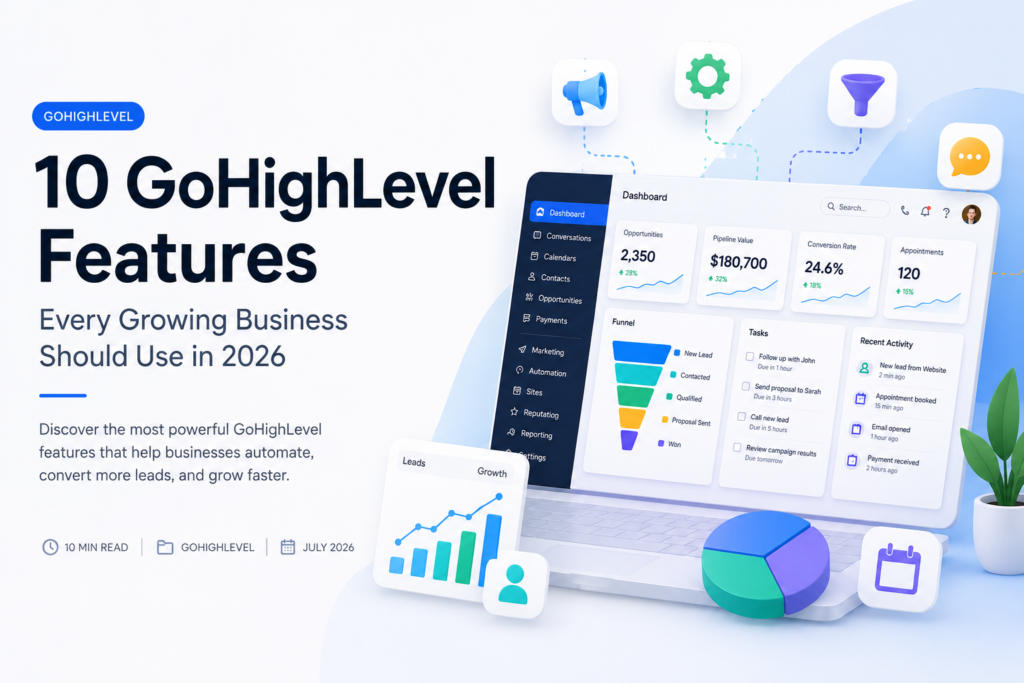
10 GoHighLevel Features Every Growing Business Should Use in 2026
Discover the 10 most powerful GoHighLevel features that help businesses automate marketing, manage leads, build sales funnels, streamline customer communication, and improve efficiency, all from one all-in-one business platform.
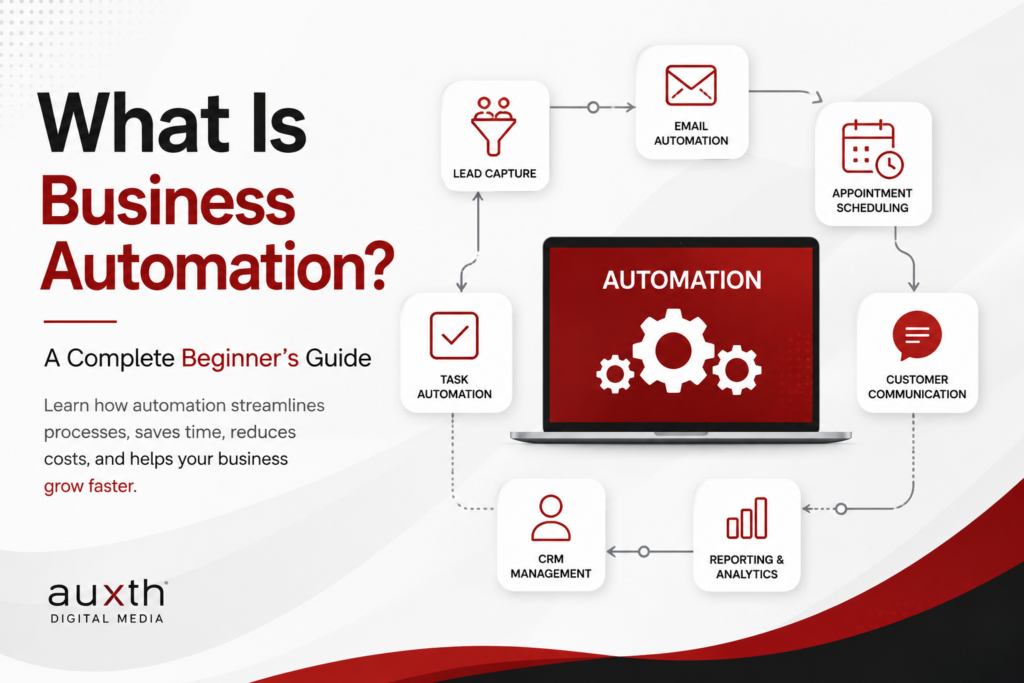
What Is Business Automation? A Complete Beginner's Guide
Discover how business automation helps companies streamline repetitive tasks, improve productivity, reduce errors, and create more efficient workflows.