
Turning Outbound Conversations Into a Predictable Pipeline
- Reading Time : 10 min
- Category : Outbound System
- Updated Date : 11-08-2026

Table Of Content
- What Is CRM Automation?
- Why Businesses Need CRM Automation
- Five Powerful CRM Automations Every Business Should Use
- How CRM Automation Improves Customer Experience
- Common CRM Automation Mistakes
- Final Thoughts
Introduction
Generating outbound leads is only the beginning. A prospect entering your database does not automatically create revenue, and a reply to an outreach message does not necessarily mean a qualified opportunity. The real value of outbound begins when those initial interactions are turned into meaningful conversations and those conversations are managed through a structured process.
For many B2B businesses, this is where the gap appears. They may have prospect lists, outreach campaigns, CRM software, and automated follow-ups, yet their pipeline still feels unpredictable. Some weeks produce several conversations while others produce almost nothing. Opportunities are created, but follow-up is inconsistent. Interested prospects disappear because nobody knows exactly where each conversation stands.
A predictable outbound pipeline requires more than generating contacts. It requires a system that consistently moves the right prospects from initial awareness to meaningful conversation, qualification, opportunity, and eventually revenue.
A Lead Is Not the Same as an Opportunity
One of the biggest mistakes businesses make with outbound is treating every lead as equally valuable. A large database may look impressive, but a contact only becomes commercially meaningful when there is a reasonable combination of relevance, need, timing, and willingness to engage.
This is why outbound performance should not be judged primarily by how many contacts are added to a CRM. A stronger measurement framework looks at what happens after those contacts enter the system. How many respond? How many engage in a genuine conversation? How many meet your qualification criteria? How many progress toward a commercial opportunity?
The difference is important because more leads do not necessarily create more pipeline. Better-qualified prospects moving consistently through a defined process are far more valuable than a large number of contacts sitting untouched in a database.
The Journey From Prospect to Pipeline
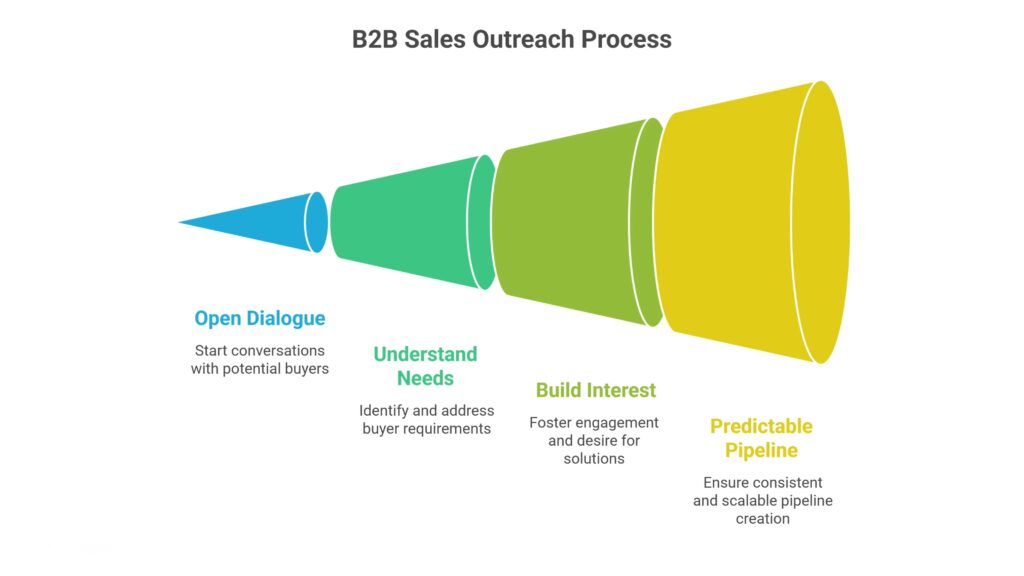
A strong outbound system gives every stage of the prospect journey a clear purpose. The objective is not to push every person toward a meeting as quickly as possible. It is to create enough relevance and trust for the right prospects to naturally progress.
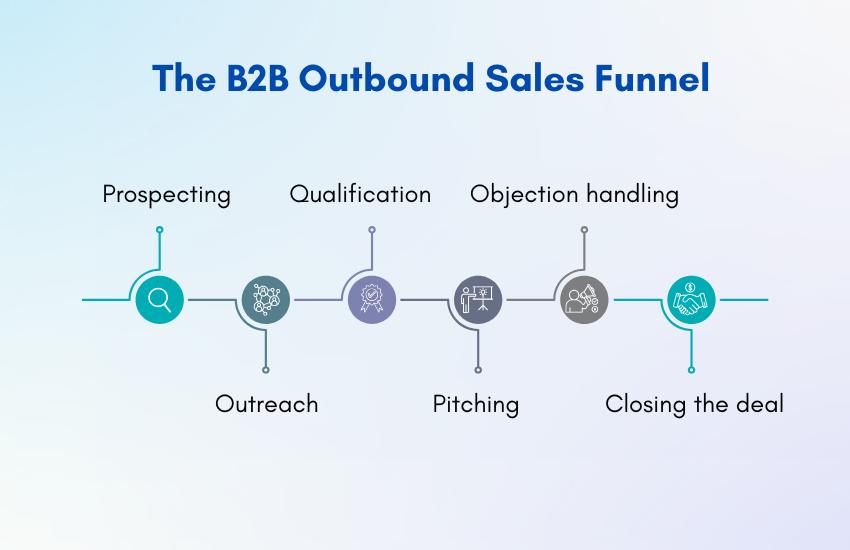
The process typically begins with targeting. The business needs to know exactly who it wants to reach and why those prospects are relevant. From there, research provides context that makes outreach more meaningful. Outreach creates the initial opportunity for interaction, while the resulting conversation allows both sides to understand whether there is a genuine business problem worth exploring.
Once interest is established, qualification becomes important. Not every conversation should become a sales opportunity. Qualification helps determine whether the prospect has the right need, authority, timing, and fit. From there, structured follow-up and pipeline management keep legitimate opportunities moving forward. The goal is not simply to create more activity at every stage. It is to create movement.
What a Predictable Outbound Process Looks Like
A predictable process does not mean that every prospect follows the exact same timeline. Different businesses, markets, and buying cycles behave differently. What should remain consistent is the operating discipline behind the process.
| Pipeline Stage | Primary Objective | Key Measurement |
|---|---|---|
| Targeting | Identify relevant prospects | Prospect fit |
| Research | Understand context and potential needs | Research quality |
| Outreach | Create relevant first interactions | Engagement rate |
| Conversation | Understand needs and timing | Meaningful conversations |
| Qualification | Identify genuine opportunities | Qualified opportunities |
| Follow-Up | Maintain momentum | Follow-up completion |
| Pipeline | Move opportunities toward revenue | Pipeline progression |
This structure creates something that many outbound programs are missing: visibility. Instead of simply knowing how many messages were sent, a business can see how many prospects entered the system, how many conversations were created, where qualified opportunities are sitting, and where prospects are getting stuck.
That makes business development easier to manage because problems can be identified before they become revenue problems.
Follow-Up Is Where Many Opportunities Are Lost
Creating the first conversation is important, but it is rarely enough. B2B buying decisions often require multiple interactions, particularly when the service involves significant investment, multiple stakeholders, or a longer decision cycle.
A prospect may respond positively but not be ready to book a meeting. Another may express interest and then become distracted by internal priorities. Someone else may need several weeks before the timing is right. Without structured follow-up, these opportunities can disappear even though the original conversation was valuable.
Effective follow-up should therefore provide continuity rather than pressure. The objective is to remain relevant, add value, answer questions, and make the next interaction easy. This is where disciplined processes and automation can support the team without turning the conversation into a generic sequence. The important distinction is that automation should support the relationship, not replace the thinking behind it.
Measure Conversations, Not Just Outreach Activity
Outbound teams often report metrics such as messages sent, emails delivered, connection requests, or contacts added. These numbers can be useful operational indicators, but they do not tell the entire story. A business can double its outreach volume and still create less pipeline if relevance declines. Conversely, a smaller campaign can generate stronger commercial results if it reaches the right prospects with better context.
A more useful measurement framework connects activity to progression. Track meaningful replies, qualified conversations, meetings created, opportunities entering the pipeline, progression between stages, and ultimately revenue generated from outbound activity. This creates a clearer relationship between business development activity and commercial outcomes.
Build the Pipeline Before You Need It
One of the biggest advantages of a structured outbound system is that it reduces dependence on urgency. Businesses that only increase prospecting when revenue slows are constantly reacting to problems that started weeks or months earlier.
A healthier approach is to maintain business development while the business is already busy. Conversations should continue. Relationships should continue developing. Follow-ups should continue. New prospects should continue entering the pipeline.
This creates a forward-looking approach to growth. Instead of asking how many clients the business needs today, leadership can ask whether enough meaningful conversations are being created now to support future revenue. That shift changes business development from a reactive sales activity into an operating discipline.
Final Thoughts
Outbound growth becomes predictable when businesses stop treating lead generation as the end goal. The real objective is to consistently create meaningful conversations with relevant prospects and move the right conversations through a structured process. Targeting creates relevance. Research creates context. Outreach creates awareness. Conversations create understanding. Qualification identifies opportunity. Follow-up protects momentum, and pipeline management creates visibility.
No single tool can create that predictability on its own. A CRM can organise information. Automation can improve consistency. AI can support research and personalisation. But the system connecting all of these elements is what turns outbound activity into a repeatable business development process. More contacts can create potential. Consistent conversations create pipeline. A disciplined system turns that pipeline into predictable growth.
Frequently Asked Questions
What is an outbound sales pipeline?
An outbound sales pipeline is the structured process used to move prospects from initial outreach through conversations, qualification, opportunities, and eventually sales. It gives a business visibility into where prospects are within the buying journey.
How can outbound lead generation become more predictable?
Predictability comes from consistency and structure. Businesses need clear targeting, relevant outreach, reliable follow-up, defined qualification criteria, and pipeline visibility. Measuring progression rather than activity alone also helps identify where opportunities are being lost.
What is more important, lead volume or lead quality?
Lead quality is generally more important than raw volume. A smaller group of relevant prospects can produce more meaningful conversations and qualified opportunities than a much larger database of poorly matched contacts.
How often should businesses follow up with outbound prospects?
There is no universal schedule because timing depends on the market, offer, buying cycle, and context of the conversation. The important principle is consistency without becoming repetitive or irrelevant. Follow-up should provide a reason to continue the conversation.
Can automation improve outbound lead generation?
Yes. Automation can support prospect management, follow-up, tracking, reminders, and communication workflows. However, automation works best when it supports a well-designed outbound strategy rather than simply increasing message volume.
Build a More Predictable Outbound Pipeline With Auxth
Auxth helps businesses build structured outbound and business development systems that connect targeting, outreach, conversations, follow-up, qualification, and pipeline management into one repeatable process.
Want to build a more predictable pipeline? Get in touch with Auxth and let’s design the system behind your next stage of growth.
Related Articles
What Is GoHighLevel? The Complete Business Guide (2026)
Learn what GoHighLevel is, how it works, its key features, benefits, pricing, and why businesses use it to automate marketing, sales, and customer management.
10 GoHighLevel Features Every Growing Business Should Use in 2026
Discover the 10 most powerful GoHighLevel features that help businesses automate marketing, manage leads, build sales funnels, streamline customer communication, and improve efficiency, all from one all-in-one business platform.
What Is Business Automation? A Complete Beginner's Guide
Discover how business automation helps companies streamline repetitive tasks, improve productivity, reduce errors, and create more efficient workflows.