
The Modern Customer Journey: From First Click to Purchase
- Reading Time : 10 min
- Category : Customer Experience & Business Growth
- Updated Date : 05-10-2026

Table Of Content
The Customer Journey Has Changed
The Five Stages of the Modern Journey
What Happens Between the Click and the Purchase?
Where Businesses Usually Lose Customers
Build the Journey Around the Customer
Final Thoughts
FAQs
Introduction
A customer rarely sees an advertisement, visits a website, and immediately makes a purchase. The modern customer journey is much more complex. A prospect may discover your business through LinkedIn, Google, social media, an advertisement, a referral, or a piece of content. They may visit your website, leave, research competitors, return several days later, read reviews, book a call, and only then become a customer.
The important question is no longer simply: “How do we generate more leads?”
It is: “What happens after someone becomes interested?”
That is where many businesses lose potential customers.
The Five Stages of the Modern Journey
A customer journey can generally be understood through five connected stages:
1. Discovery
The prospect first becomes aware of your business. This could happen through:
Search engines
Social media
Paid advertising
LinkedIn
Referrals
Content marketing
At this stage, attention is the goal.
2. Exploration
The prospect starts researching. They may visit your website, read your content, check your services, look at reviews, or compare you with competitors. Now clarity matters.
3. Evaluation
The prospect begins asking: “Is this the right solution for me?”
Your positioning, proof, case studies, reviews, communication, pricing information, and overall experience influence this decision.
4. Conversion
The prospect takes a meaningful action. That might be:
Booking a consultation
Requesting a quote
Filling out a form
Starting a conversation
Making a purchase
The easier this step is, the less friction exists between interest and action.
5. Retention
The journey does not end after the purchase. Onboarding, communication, support, follow up, reviews, referrals, and repeat purchases all influence the long term relationship.

What Happens Between the Click and the Purchase?
This is where businesses often underestimate the customer journey. A prospect may interact with several systems before becoming a customer.
| Customer Stage | Customer Action | Business Requirement |
|---|---|---|
| Discovery | Sees your brand | Clear positioning |
| Exploration | Visits website | Relevant information |
| Evaluation | Compares options | Trust and proof |
| Conversion | Books or enquires | Simple conversion process |
| Follow Up | Waits for response | Fast communication |
| Purchase | Becomes customer | Smooth onboarding |
| Retention | Decides whether to return | Consistent experience |
Where Businesses Usually Lose Customers
Customer journey problems are often hidden inside small gaps. A business may generate excellent traffic but have a confusing website. It may capture leads but respond too slowly. It may have a strong sales team but poor lead qualification. It may close customers successfully but provide a weak onboarding experience.
Each individual problem may appear small. Together, they can create a major revenue leak. This is why customer journey optimization is not simply a marketing task. It involves marketing, sales, technology, communication, and customer experience working together.
These metrics help leaders identify where the system is performing well and where improvements are needed.
Build the Journey Around the Customer
The best customer journeys are designed around what the customer needs at each stage. Ask:
What does the customer need to understand?
What could stop them from moving forward?
What information would increase their confidence?
What action should they take next?
What happens immediately after that action?
These questions help businesses move from disconnected marketing activities to a connected customer journey. Automation can then support the process by handling tasks such as lead capture, notifications, follow ups, appointment reminders, qualification, and customer communication. The goal is not to automate the relationship. The goal is to make the relationship easier to manage consistently.
Final Thoughts
The modern customer journey is no longer a straight line from advertisement to purchase. Customers research. Compare. Leave. Return. Ask questions. Look for proof. And often need multiple interactions before making a decision. Businesses that understand this can design better experiences and reduce the gaps where potential customers disappear. A strong customer journey does not simply generate attention.
It turns attention into trust, trust into action, and action into long term customer relationships.
Frequently Asked Questions
What is a customer journey?
A customer journey is the complete series of interactions a person has with a business, from initial awareness through research, conversion, purchase, and retention.
Why is the customer journey important?
A well designed customer journey reduces friction, improves customer experience, supports conversions, and helps businesses build stronger long term relationships.
What is customer journey mapping?
Customer journey mapping is the process of documenting the different stages, interactions, questions, and challenges a customer experiences when engaging with a business.
How can automation improve the customer journey?
Automation can support lead capture, follow ups, appointment reminders, notifications, qualification, and other repetitive interactions, helping businesses respond more consistently.
Does the customer journey end after a purchase?
No. Post purchase communication, onboarding, support, retention, reviews, and repeat purchases are important parts of the overall customer journey.
Build a Better Growth System With Auxth
At Auxth, we help businesses connect their marketing, customer journeys, CRM, automation, and sales processes into a more efficient growth system. The objective is simple:
Create a customer experience that moves people forward without unnecessary friction.
Explore how Auxth can help you build a more connected digital growth system.
Related Articles
What Is GoHighLevel? The Complete Business Guide (2026)
Learn what GoHighLevel is, how it works, its key features, benefits, pricing, and why businesses use it to automate marketing, sales, and customer management.
10 GoHighLevel Features Every Growing Business Should Use in 2026
Discover the 10 most powerful GoHighLevel features that help businesses automate marketing, manage leads, build sales funnels, streamline customer communication, and improve efficiency, all from one all-in-one business platform.
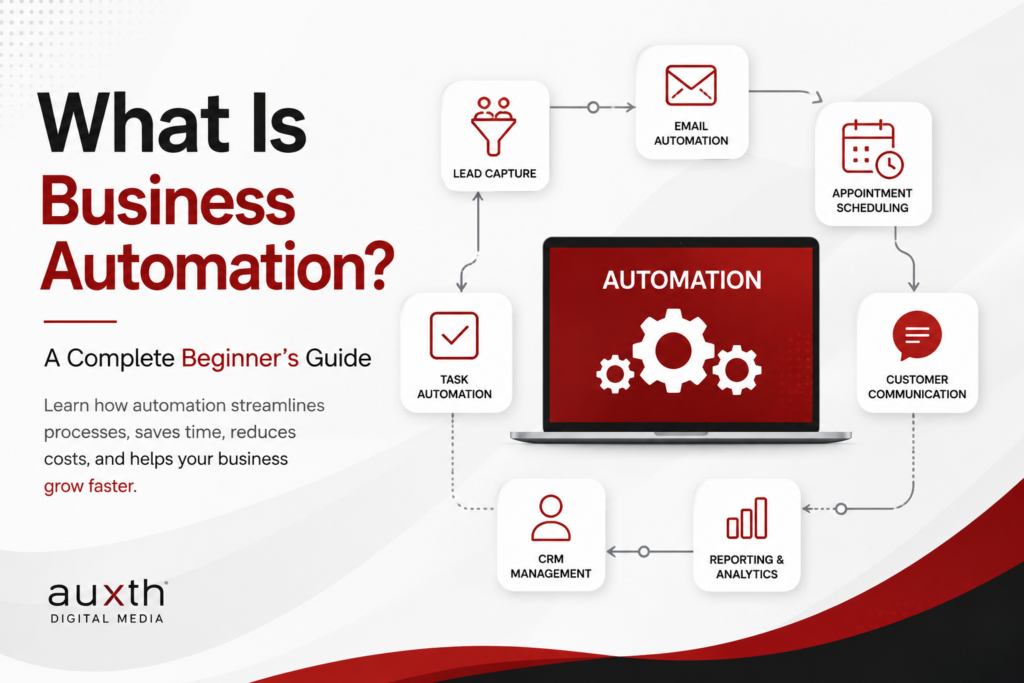
What Is Business Automation? A Complete Beginner's Guide
Discover how business automation helps companies streamline repetitive tasks, improve productivity, reduce errors, and create more efficient workflows.