
- Reading Time : 10 min
- Category : AI
- Updated Date : 01-09-2026
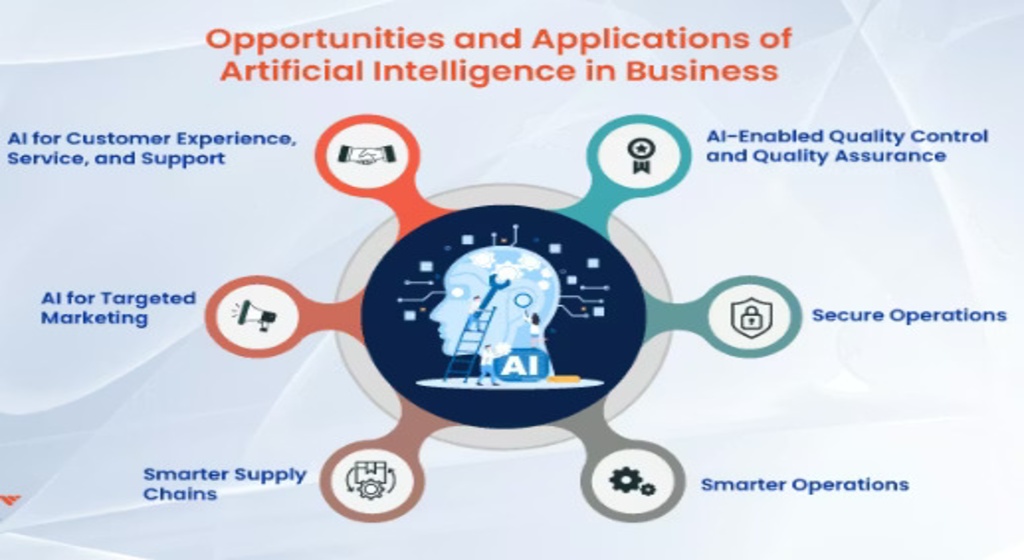
Table Of Content
- What Does AI Implementation in Business Actually Mean?
- Why Businesses Often Overcomplicate AI
- Start With Your Biggest Operational Bottleneck
- Build Around a Central CRM
- Practical AI Applications Businesses Can Start With
- Measure Business Outcomes, Not AI Activity
- Keep Humans in the Loop
- Final Thoughts
Introduction
Artificial intelligence does not have to mean futuristic robots, complicated systems, or replacing entire departments. For most businesses, the most valuable applications of AI are much more practical. A company may have leads arriving through its website, employees answering the same customer questions every day, sales teams manually updating a CRM, staff coordinating appointments, or marketers spending hours managing repetitive communication.
These are the kinds of everyday processes where AI and automation can make a measurable difference. The opportunity is not simply to add AI because everyone is talking about it. The opportunity is to identify repetitive work, connect the right systems, and allow technology to handle processes that do not need constant manual attention. Businesses can start small and expand their use of AI as their systems become more mature. Here are seven practical ways AI can be used in everyday business operations.
1. Automate Lead Capture and Lead Management
Every new lead represents a potential business opportunity. However, capturing a lead is only the first step. The bigger challenge is what happens afterward. If a prospect fills out a website form, someone may need to manually copy the information into a CRM, assign the lead to a salesperson, send a response, update the pipeline, and remember to follow up later.
Every manual step creates an opportunity for something to be delayed or forgotten. AI and workflow automation can connect these steps. A website form can feed information directly into a centralized CRM. The system can then identify the appropriate pipeline, assign the opportunity, trigger communication, and create the next action for the sales team. This gives employees a clearer view of incoming opportunities while reducing repetitive administrative work.
Auxth’s business automation systems are designed around lead capture, CRM management, automated follow ups, and pipeline tracking.
Why This Matters
Faster lead handling can create a better customer experience while giving sales teams more time to focus on actual conversations rather than data entry. The key is not simply capturing more leads. It is making sure that the leads a business already generates are handled consistently.
2. Use AI for Customer Questions and First Level Support
Many businesses answer the same questions repeatedly. Customers may ask about services, availability, appointments, processes, pricing information, or general business details. Having employees manually answer every basic question can consume significant time. AI chatbots and virtual assistants can handle appropriate first level conversations and provide information based on the business’s knowledge and instructions.
When an inquiry requires human judgment or a more detailed response, the conversation can be passed to an appropriate team member. This creates a useful division of responsibilities. AI can manage repetitive conversations while employees concentrate on complex requests and relationship driven interactions.
What AI Support Can Handle
Depending on the business and implementation, AI can assist with:
- Frequently asked questions
- Initial lead qualification
- Basic service information
- Customer information collection
- Appointment related questions
- Initial inquiry routing
- Basic conversational support
The objective should always be to improve accessibility without sacrificing the quality of important human interactions.
3. Automate Appointment Scheduling and Reminders
Appointment scheduling is another area where businesses can remove unnecessary manual work. Traditional scheduling often involves multiple messages between the customer and business. One person asks about availability. The customer suggests a time. The business checks the calendar. Another time is proposed. The process continues until both sides find a suitable slot.
An automated scheduling system can simplify this journey. Customers can access available times, select a suitable appointment, and receive confirmation automatically. Reminder messages can also be triggered before the appointment. This is particularly useful for consultants, coaches, agencies, professional services, and other businesses that rely on discovery calls or scheduled consultations.
Auxth’s automation services include smart appointment scheduling with calendar synchronization, automated reminders, and workflow based booking systems.
The Business Benefit
The value goes beyond saving administrative time. A smoother scheduling experience reduces friction between interest and action. Someone who wants to speak with a business should not have to exchange several messages simply to find an available time.
4. Create Automated Lead Follow Up
One of the most common operational problems in sales is inconsistent follow up. A prospect may express interest but become busy. A salesperson may intend to follow up but forget. Another lead may receive several messages while someone else receives none.
Automation can create a consistent process. For example, when someone submits an inquiry, the system can send an immediate confirmation. If the prospect does not respond, another appropriate message can be scheduled. If the prospect replies, the workflow can change based on the new interaction. This means communication can respond to customer behavior rather than relying entirely on manual reminders.
A Simple Example
Consider a prospect who requests information about a service. The system could:
- Capture the prospect in the CRM.
- Send an immediate confirmation.
- Notify the relevant salesperson.
- Start an appropriate follow up sequence.
- Stop automated messages when the prospect responds.
- Move the opportunity through the relevant pipeline stages.
The result is a more organized customer journey.
5. Use AI and Automation to Support Marketing
Marketing teams often spend considerable time performing repetitive activities. Content needs to be prepared. Campaigns need to be scheduled. Leads need to be tracked. Customers need to receive relevant communication. Performance needs to be reviewed. AI can support parts of this process while automation handles repetitive actions.
For example, customer information stored in a CRM can help businesses organize audiences and trigger communication based on customer activity. A prospect who has shown interest in a service can receive relevant nurturing communication. A customer who has completed a transaction can receive an appropriate follow up.
A dormant contact can enter a reactivation sequence. The important distinction is that AI should not replace marketing strategy. Instead, it can help execute and support the strategy more efficiently. Auxth’s marketing systems combine content, paid advertising, lead capture, CRM management, and automated customer journeys to connect marketing activity with commercial outcomes.
6. Automate Repetitive Administrative Work
Some of the biggest opportunities for automation are not customer facing at all. Businesses often move information manually between different systems. A team may receive information through one application, transfer it into another system, create a document, update a CRM record, and then notify another employee. When repeated hundreds of times, these small tasks become a significant operational cost.
Workflow automation can connect systems so that information moves automatically when a defined event occurs. For example, an action in one system can trigger an update in another system. A completed form can create a record. A new customer can trigger an onboarding task. A completed process can generate a notification.
Auxth works with automation technologies including GoHighLevel, n8n, Zapier, webhooks, API connections, and AI agents to create connected workflows.
Why This Is Important
The goal is not to automate every employee activity. The goal is to remove repetitive tasks that add little strategic value. Employees can then spend more time on work that requires expertise, creativity, judgment, and customer interaction.
7. Use AI to Improve Customer Journey Management
A customer’s relationship with a business usually involves multiple stages. Someone may first discover the company through social media. They may visit the website. They might submit a form. They could book an appointment. They may receive follow up communication. Eventually, they might become a customer. Without connected systems, these interactions can exist in separate places.
AI and CRM automation can help businesses create a more connected customer journey. Customer information, communication history, pipeline status, appointments, and other relevant interactions can be organized around a centralized CRM. This allows teams to understand where a prospect or customer currently sits within the journey. Instead of treating every interaction as a separate event, the business can build a continuous process.

Where Should a Business Start?
With so many possible applications, businesses may still wonder which AI project they should implement first. The answer is usually not the most impressive technology. Start with the process that creates the most friction.
| Business Process | Common Challenge | Practical AI or Automation | Business Impact |
|---|---|---|---|
| Lead Capture | New inquiries require manual entry | Automated CRM capture | Better lead visibility |
| Customer Support | Repetitive questions consume time | AI chatbot or virtual assistant | Faster initial response |
| Scheduling | Manual appointment coordination | Automated booking and reminders | Less administrative work |
| Lead Follow Up | Prospects are not contacted consistently | Automated follow up workflows | More consistent nurturing |
| Marketing | Repetitive campaign activities | AI assisted marketing automation | More efficient execution |
| Administration | Information is moved between systems manually | Connected workflows and integrations | Reduced data entry |
| Customer Journey | Customer data is scattered | Centralized CRM and automation | Better journey visibility |
AI Should Make Operations Simpler
One of the biggest misconceptions about business AI is that more technology automatically means better results. It does not. A business can have multiple AI tools and still operate inefficiently if those tools do not communicate with one another. The goal should be simplification.
Instead of adding another application every time a problem appears, businesses should consider whether existing systems can be connected and automated. A well designed system can reduce the number of manual steps employees need to perform while giving management better visibility into the overall operation.
Measure the Result
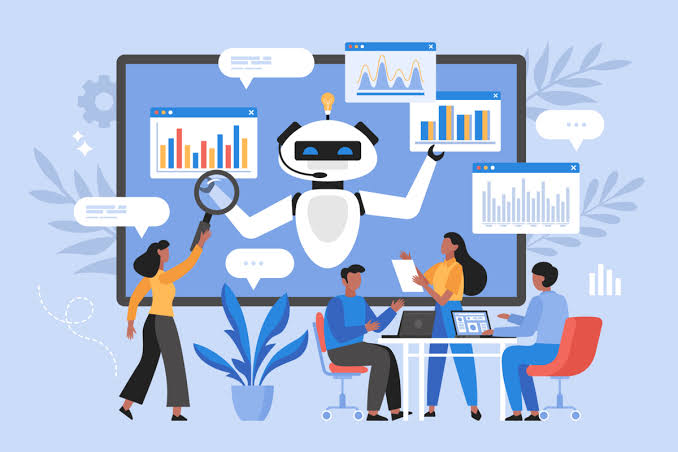
Every AI implementation should have a measurable objective. Before implementing a workflow, determine what improvement you expect. For example:
- Reduce manual lead entry.
- Improve response times.
- Increase appointment bookings.
- Reduce missed follow ups.
- Decrease administrative workload.
- Improve customer communication.
- Give sales teams better pipeline visibility.
After implementation, compare the results. This turns AI from an abstract technology investment into a measurable business improvement.
Final Thoughts
AI is most useful when it solves a real business problem. Businesses do not need to automate everything overnight. They can start with practical processes such as lead capture, customer support, appointment scheduling, follow ups, marketing, administration, and customer journey management. The most important step is choosing the right problem.
Once a business identifies a repetitive process that consumes time or creates missed opportunities, AI and automation can be introduced in a controlled way. The result should not be a more complicated business. It should be a business where technology quietly handles repetitive work in the background while employees focus on customers, decisions, growth, and higher value activities.
Frequently Asked Questions
What are the most practical uses of AI in business?
Practical applications include lead management, customer support, appointment scheduling, follow ups, marketing automation, administrative workflows, and customer journey management.
Can small businesses use AI effectively?
Yes. Small businesses can start with focused applications such as automated lead capture, customer communication, appointment scheduling, or repetitive administrative workflows without implementing a large AI system.
Can AI automate lead follow ups?
Yes. Automated workflows can trigger email and SMS communication based on events such as form submissions, customer responses, appointments, or other defined actions.
How can AI help customer service?
AI chatbots and virtual assistants can handle suitable first level questions, collect information, qualify inquiries, and route more complex conversations to human employees.
Does AI replace CRM systems?
AI does not necessarily replace a CRM. In many cases, AI and automation work alongside a CRM to organize customer data, manage pipelines, trigger workflows, and support customer communication.
Make AI Work for Your Business
Auxth helps businesses build practical AI and automation systems around their existing operations. From CRM integration and automated lead follow ups to AI assistants, appointment scheduling, marketing automation, and connected workflows, the goal is to create systems that reduce operational friction and support sustainable business growth.
If you want to find out where AI can make the biggest practical difference in your business, book a strategy consultation with Auxth and start with the processes that matter most.
Related Articles
What Is GoHighLevel? The Complete Business Guide (2026)
Learn what GoHighLevel is, how it works, its key features, benefits, pricing, and why businesses use it to automate marketing, sales, and customer management.
10 GoHighLevel Features Every Growing Business Should Use in 2026
Discover the 10 most powerful GoHighLevel features that help businesses automate marketing, manage leads, build sales funnels, streamline customer communication, and improve efficiency, all from one all-in-one business platform.
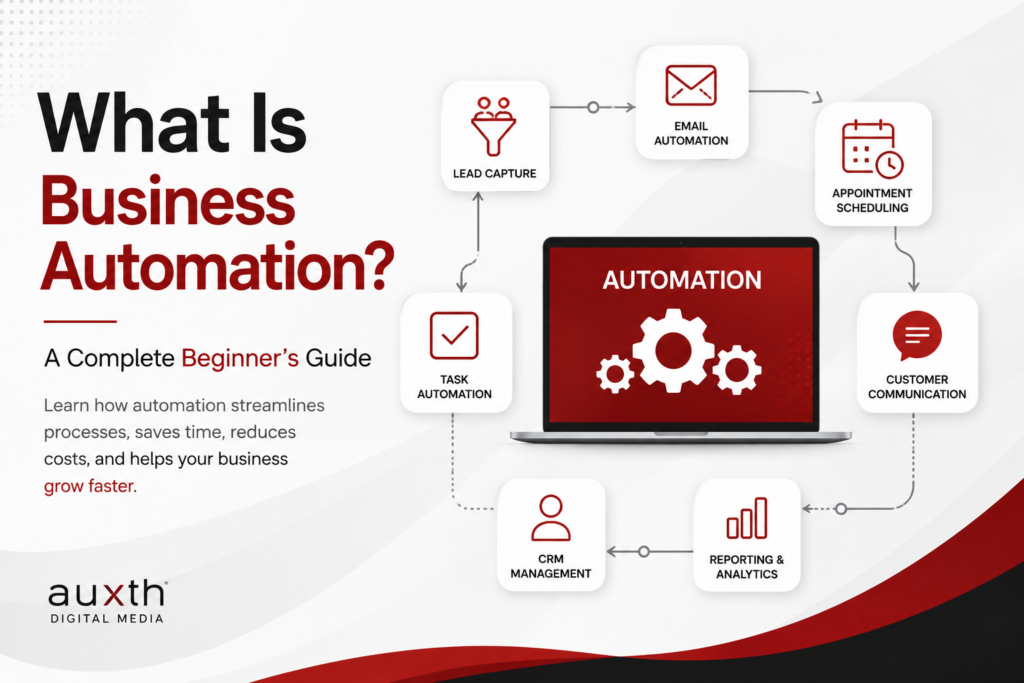
What Is Business Automation? A Complete Beginner's Guide
Discover how business automation helps companies streamline repetitive tasks, improve productivity, reduce errors, and create more efficient workflows.