
Why Your Website Isn't Converting Visitors Into Customers
- Reading Time : 10 min
- Category : Outbound System
- Updated Date : 17-08-2026
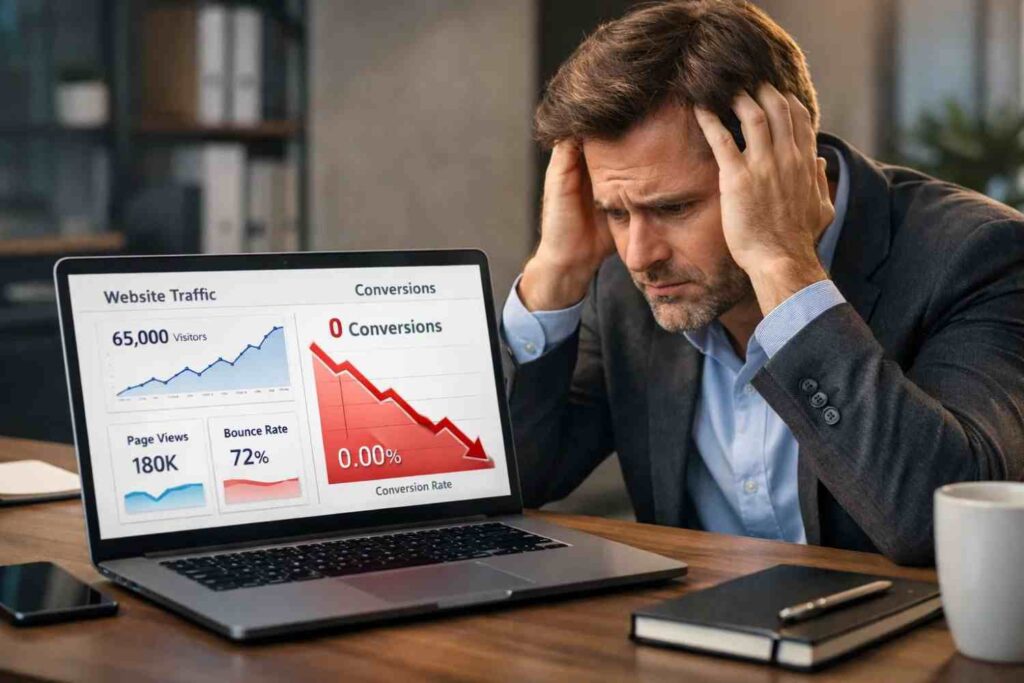
Table Of Content
- Your Website May Be Getting Traffic But Losing Opportunities
- Your Messaging Is More Important Than Your Design
- Too Many Choices Can Reduce Conversions
- Trust Can Make or Break a Decision
- Your Website Experience Matters
- The Difference Between a Website and a Conversion System
- Final Thoughts
Introduction
Getting people to visit your website is only the first part of digital marketing. The real challenge begins when those visitors arrive. A website can receive hundreds or even thousands of visitors every month and still generate very few enquiries, bookings, or sales. When this happens, many businesses immediately assume they need more traffic. They invest in SEO, increase their advertising budget, or publish more content without addressing what happens after someone lands on the website.
The problem may not be the amount of traffic coming to your website. It may be that the website isn’t giving visitors a strong enough reason to stay, trust your business, or take the next step. A high-performing website should do more than explain what your company does. It should guide visitors from interest to action through clear messaging, strong positioning, trust, and a simple customer journey.
Your Website May Be Getting Traffic But Losing Opportunities
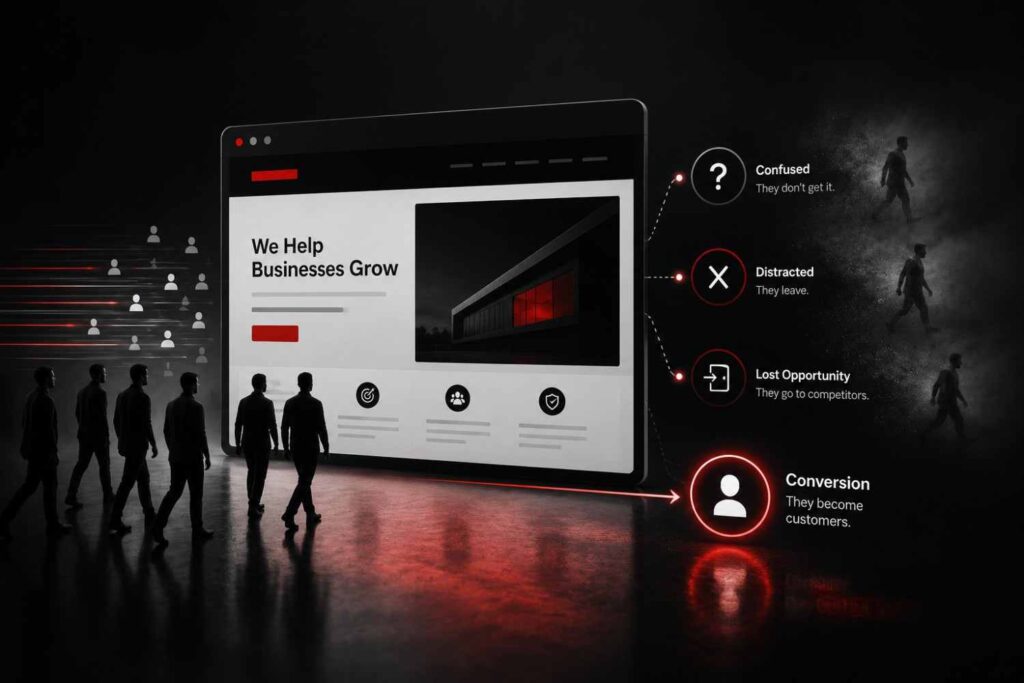
Imagine someone searches for a service you provide, clicks through to your website, and lands on your homepage. Within a few seconds, they should understand three things: what you do, who you help, and what they should do next.If any of those answers are unclear, the visitor has to work to understand your business.
They may leave the website and continue searching, visit a competitor, or simply postpone making a decision and never return.This is one of the biggest differences between a website that exists and a website that converts. A basic website provides information. A conversion-focused website creates a path toward a decision.
Your Messaging Is More Important Than Your Design
A visually impressive website cannot compensate for unclear messaging. Businesses often focus heavily on colours, animations, images, and layouts while overlooking the words that actually explain their value. If your headline simply says what your company does without explaining why it matters to the customer, visitors have little reason to continue.
Your website should communicate the outcome you help customers achieve. Instead of simply saying that you provide digital marketing services, for example, your messaging can focus on helping businesses generate qualified opportunities through connected marketing systems. The visitor should quickly understand the problem you solve, the result you provide, and why your business is worth considering.
Too Many Choices Can Reduce Conversions
Another common problem is giving visitors too many things to do. A homepage may contain multiple buttons, several competing offers, social links, service categories, pop-ups, forms, and navigation options. Each individual element may seem useful, but together they can make the customer journey confusing.
A conversion-focused website should have a clear primary action. That action could be booking a consultation, requesting a quote, starting a project, making a purchase, or contacting the business. Other actions can still exist, but they should support the primary journey rather than compete with it. When visitors know exactly what to do next, moving through the website becomes much easier.
What a Conversion-Focused Website Should Do
| Website Element | Purpose | Conversion Impact |
|---|---|---|
| Clear Value Proposition | Explain the core benefit quickly | Helps visitors understand why they should stay |
| Strong CTA | Direct visitors toward the next step | Reduces hesitation and confusion |
| Trust Signals | Demonstrate credibility | Reduces perceived risk |
| Relevant Service Pages | Match visitor intent | Creates more relevant journeys |
| Simple Forms | Make enquiries easy | Reduces friction |
| Mobile Optimisation | Improve usability across devices | Prevents mobile visitors from leaving |
| CRM Integration | Capture and organise enquiries | Prevents opportunities from being lost |
| Analytics | Measure visitor behaviour | Identifies conversion problems |
Trust Can Make or Break a Decision
People rarely make important purchasing decisions based only on what a business says about itself. They want evidence. Testimonials, case studies, reviews, certifications, results, client experience, clear service information, and professional presentation can all help reduce uncertainty. This is especially important when a visitor is discovering your business for the first time. They are asking themselves whether you are legitimate, whether you understand their problem, and whether working with you is worth the investment.
Your website should answer those questions before the visitor has to ask them. Trust doesn’t need to be created through exaggerated claims. In many cases, clear information and genuine evidence are much more persuasive.
Your Website Experience Matters
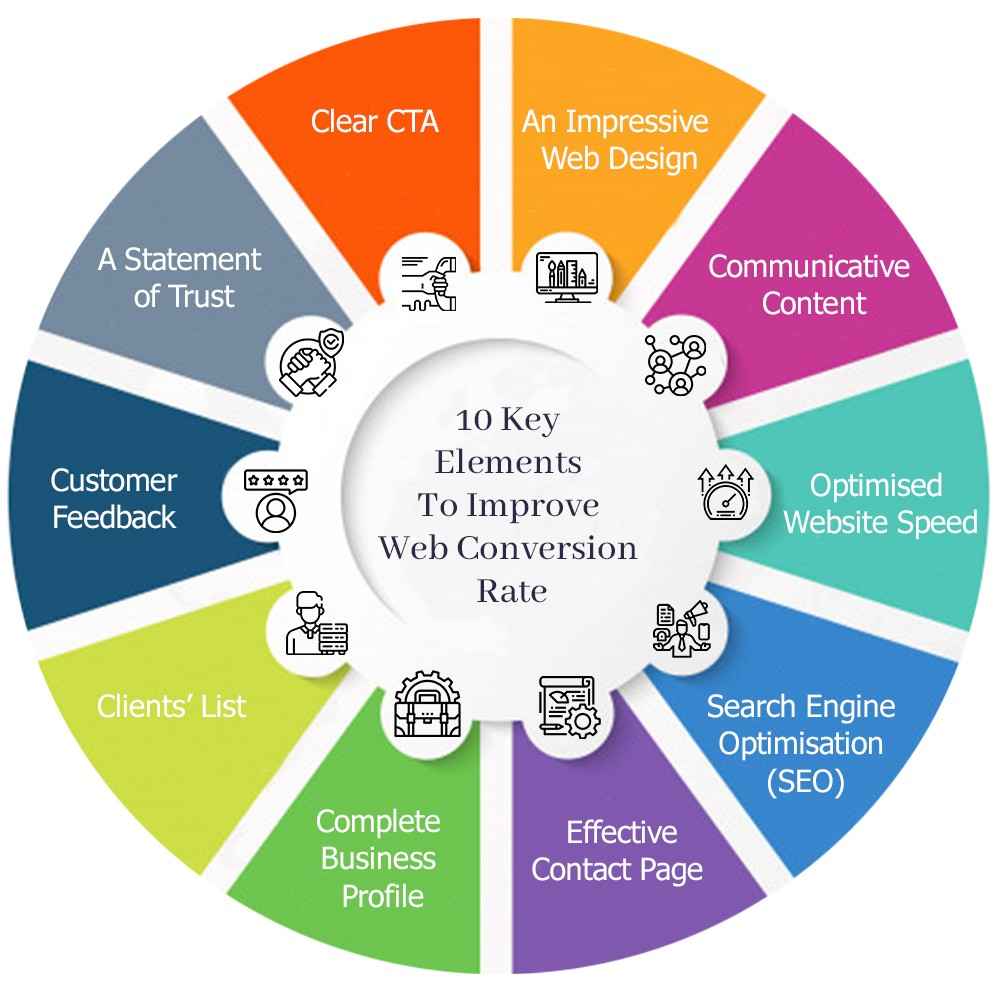
Even strong messaging can fail if the website is difficult to use. Slow-loading pages, confusing navigation, poor mobile layouts, small text, broken elements, excessive animations, and complicated forms can all create friction. Think about the website from the customer’s perspective rather than the business owner’s perspective.
How quickly can they find the service they need? Can they understand the offer without reading every paragraph? Can they contact you easily from a mobile device? Can they see what happens after submitting a form? Every unnecessary step creates another opportunity for the visitor to leave.
The Difference Between a Website and a Conversion System
A website should not operate separately from the rest of your digital marketing. When someone submits an enquiry, what happens next? Does the information enter your CRM? Is the team notified? Does the customer receive an immediate confirmation? Is a follow-up scheduled? Can you see where the opportunity is in the sales process?
These questions reveal why website conversion is bigger than design. A strong website should connect with the systems behind it. Traffic from SEO and Google Ads should lead to relevant pages. Those pages should encourage action. Enquiries should enter the appropriate workflow. Follow-up should happen consistently. This creates a connected journey instead of a website that simply collects visitors.
Final Thoughts
Your website should be more than an online brochure. It should be an active part of your sales and marketing system. When your messaging is clear, your customer journey is simple, your trust signals are strong, and your website connects with the systems responsible for follow-up and conversion, every visitor has a better opportunity to become a customer.
The goal isn’t simply to get more people onto your website. The goal is to make the people who arrive understand your value, trust your business, and know exactly what to do next. That is what turns a website from an online presence into a growth asset.
If your business is getting website traffic but struggling to turn visitors into enquiries or customers, the problem may not be your traffic. It may be your conversion system. Auxth helps businesses build connected digital growth systems where websites, marketing, CRM, automation, and customer journeys work together.
Frequently Asked Questions
Why is my website getting traffic but no leads?
Traffic alone does not guarantee conversions. Unclear messaging, weak calls to action, poor user experience, lack of trust signals, complicated forms, or a disconnected follow-up process can prevent visitors from becoming leads.
What makes a website high converting?
A high-converting website clearly communicates its value, builds trust, provides relevant information, makes the next step obvious, and removes unnecessary friction from the customer journey.
How can I improve my website conversion rate?
Start by reviewing your messaging, calls to action, service pages, forms, mobile experience, page speed, trust signals, and analytics. Identify where visitors leave and improve those areas systematically.
Does SEO help website conversions?
SEO primarily helps attract relevant search traffic, but the website experience determines what happens after visitors arrive. SEO and conversion optimisation should therefore work together.
Should my website connect to a CRM?
For businesses that rely on enquiries and sales opportunities, connecting the website to a CRM can help capture leads, organise opportunities, trigger follow-ups, and prevent potential customers from being forgotten.
Ready To Turn Your Website Into A Growth Engine?
Your website should do more than attract visitors. It should turn the right visitors into enquiries, conversations, and customers.
If your website is getting traffic but not producing the results you expect, Auxth can help identify where your customer journey is losing opportunities and build a more effective conversion system around your business.
Related Articles
What Is GoHighLevel? The Complete Business Guide (2026)
Learn what GoHighLevel is, how it works, its key features, benefits, pricing, and why businesses use it to automate marketing, sales, and customer management.
10 GoHighLevel Features Every Growing Business Should Use in 2026
Discover the 10 most powerful GoHighLevel features that help businesses automate marketing, manage leads, build sales funnels, streamline customer communication, and improve efficiency, all from one all-in-one business platform.
What Is Business Automation? A Complete Beginner's Guide
Discover how business automation helps companies streamline repetitive tasks, improve productivity, reduce errors, and create more efficient workflows.